
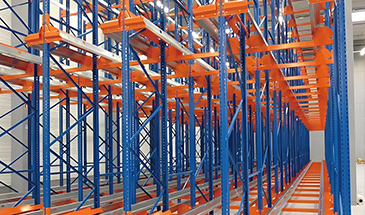
Professional knowledge on issues to be noted in the planning and design of attic shelves
The following are the core issues that need to be noted during planning and design:
Building and structural safety (primary prerequisite)
1. Survey of original building conditions:
(1) Floor net height: It must be accurately measured to ensure that there is sufficient operating and storage space on both the upper and lower floors (usually not less than 2.2 meters on the lower floor and not less than 2 meters on the upper floor) after deducting the height of the main and auxiliary shelves, floor panels, fire pipes, and lighting systems.
(2) Ground load: After calculating the total weight of the attic system (shelves floor panels maximum stored goods maximum designed pedestrian flow), it must be less than the designed load-bearing capacity of the building floor.
(3) Column grid and span: The position and spacing of the columns in the original building determine the span and direction of the attic main beam, which is the basis of the design.
(4) Fire protection and facilities: It is necessary to avoid or reserve the original fire sprinkler heads, smoke exhaust pipes, ventilation systems, cable trays, etc. of the building.
2. Structural system design:
(1) Weight bearing mode selection: Clearly determine whether it is independent (the shelf system can bear weight independently) or attached (partially relying on the original building walls or columns). Independent style is more common and has less impact on the original building.
(2) Load calculation and distribution: Strict calculations must be carried out by professional engineers, including static loads (structural self weight), live loads (weight of stored goods), and dynamic loads (impact forces generated by personnel walking, forklift operations, and cargo handling). The load needs to be effectively transmitted to the ground through columns, main beams, and secondary beams.
(3) Seismic resistance and stability: Consider seismic requirements according to local building codes. Sufficient slant support, inter column bracing and reliable connection with the ground shall be designed to prevent structural instability caused by horizontal force.
Logistics operational efficiency and humanized design
1. Access operation mode planning:
(1) Upper level access method: Determine whether to use manual access (requiring the design of secure pedestrian stairs, passages, and protective barriers), forklift access (requiring the design of ramps or lifting platforms, and calculating their load-bearing capacity and size), or conveyor line access (for automated connection).
(2) Vertical transportation of goods: Plan how to efficiently and safely transport goods up and down stairs, such as using elevators, hydraulic lifting platforms, or forklifts that pass through ramps.
2. Optimization of flow and spatial layout:
(1) Entrances and passages: The positions of entrances and exits on the upper and lower levels should be coordinated and smooth to avoid cross interference. The width of the passage must meet the requirements for safe passage and rotation of personnel, tools, or forklifts.
(2) Functional area division: Based on the turnover rate of goods (FIFO/FILO principle), category characteristics (light/heavy goods), and operational processes, reasonably plan the storage areas, picking areas, and temporary storage areas of the upper and lower levels.
(3) Column and dead corner treatment: Through refined design, minimize the "dead corners" caused by shelf columns on storage space and visibility.
System details and compliance
1. Floor system selection:
(1) Material and load-bearing capacity: commonly used steel grilles (ventilated and transparent, lightweight), patterned steel plates (strong load-bearing capacity, good overall integrity), or concrete floor slabs (good fire resistance, low noise). It needs to be selected based on the carrying capacity and cost.
(2) Safety protection: All open edges must be equipped with standard height skirting boards and protective railings (usually not less than 1 meter), and stairs must have handrails and anti slip measures.
2. Integration of auxiliary systems:
(1) Lighting system: Ensure uniform and sufficient illumination on each working surface, especially in areas where the lower layer is easily obstructed. The lighting fixtures should be installed above the passage to avoid collision with goods.
(2) Fire protection system: This is a mandatory focus of the design. It is necessary to ensure that the fire zone complies with regulations, with sprinkler heads extending to all levels of the attic (including the interior of the shelves), smoke detectors fully covered, and necessary fire hydrants, emergency lighting, and signage installed.
(3) Ventilation and lighting: If the upper level is used for long-term office or storage of special goods, natural or mechanical ventilation should be considered.
3. Regulations and acceptance:
(1) Building approval: Large or complex attic projects may require approval from the local housing and construction department to obtain construction permits.
(2) Technical standards: The design and manufacturing must comply with the national "Steel Structure Design Standards", "Attic style Shelves" industry standards, etc.
(3) Completion acceptance: After completion, the supplier, owner, and potential third parties should conduct load testing and safety inspections based on the design drawings and contract to ensure that everything is foolproof.