
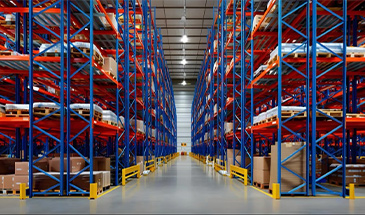
Shelf planning and solutions for reducing costs and increasing efficiency in e-commerce warehousing
The design scheme of e-commerce warehouse shelves needs to comprehensively consider multiple factors, including inventory demand, shelf type, shelf height, storage space layout, product classification and positioning, logistics flow planning, picking system design, safety and ventilation considerations, as well as cost control and investment return evaluation. Here is a detailed design proposal:
1. Inventory demand analysis
(1) Product types and quantities: Count the types of products in the e-commerce warehouse and the quantity of each product, in order to plan the shelf types and quantities reasonably.
(2) Seasonal sales: Analyze the seasonal sales of products, and for products with strong seasonality, consider setting up seasonal shelves so that they can be quickly accessed during peak sales seasons.
(3) Product size and weight: Based on the size and weight of the product, choose the appropriate shelf type and structure to ensure that the shelf can carry the weight of the product and is easy to access.
2. Selection of shelf types
(1) Laminated shelves: suitable for lighter and smaller items such as stationery, small accessories, etc.
(2) Drive in shelving: high-density storage, suitable for large quantities and small varieties of goods, such as bulk daily necessities, food, etc.
(3) Cantilever shelving: suitable for long or irregular goods, such as pipes, profiles, etc.
(4) Tray shelving: Suitable for goods that require storage on pallets, such as heavy machinery parts, household appliances, etc.
(5) Automated shelves: suitable for high-frequency, small batch goods such as electronic products, cosmetics, etc. Automated shelves can be used in conjunction with automated guided vehicles (AGVs), robots, and other equipment to improve storage and retrieval efficiency.
3. Reasonable planning of shelf height to fully utilize warehouse space. The height of the shelves should be determined based on the clear height of the warehouse, the operating height of forklifts or elevators, and the size and weight of the goods. Meanwhile, considering the convenience of personnel operation, the height of the shelves should not be too high, generally not exceeding 6 meters.
4. Storage space layout
(1) Partition storage: Divide the warehouse into different storage areas based on the attributes and purposes of the products, such as new product area, best-selling product area, flat selling product area, unsold product area, etc.
(2) Channel setting: Ensure that the channels between shelves are spacious and unobstructed, facilitating the operation of logistics equipment such as forklifts and picking trucks. The width of the channel should be determined based on the size of the logistics equipment and operational requirements.
(3) Safe distance: Set a certain safe distance between shelves and between shelves and walls to prevent shelves from collapsing or colliding, causing personal injury and property damage.
5. Product classification and positioning are stored based on the attributes, purposes, etc. of the product. Store similar products on adjacent shelves for easy management and picking. Meanwhile, for best-selling and seasonal products, they should be stored in easily accessible locations to improve storage and retrieval efficiency.
6. Reasonable logistics route planning and design, including the driving routes of logistics equipment such as forklifts and picking trucks. The logistics flow should try to avoid dead corners and repetitive routes to ensure that logistics equipment can operate efficiently and smoothly. At the same time, considering the needs of future business growth, the logistics flow line should have a certain degree of scalability.
7. Design of picking system. Picking system is the core link of warehouse operation. According to the characteristics and requirements of e-commerce warehouses, electronic tag assisted picking systems, RFID picking systems, etc. can be designed. The picking path can be S-shaped, Z-shaped, or partitioned to improve picking efficiency. At the same time, considering the convenience of personnel operation, the picking system should have a good human-computer interaction interface and a friendly operating experience.
8. Safety and ventilation considerations
(1) Security measures: Install monitoring equipment and set up fire prevention facilities in the warehouse to ensure its safety. At the same time, regularly inspect and maintain shelves, logistics equipment, etc. to ensure their normal operation.
(2) Ventilation system: A well-designed ventilation system ensures air circulation in the warehouse and avoids the impact of high or low humidity on the goods. The ventilation system should be determined based on the size and layout of the warehouse.
9. Cost control and investment return evaluation should fully consider cost factors when formulating shelf design plans. The cost of purchasing, installing shelves and other facilities, maintenance, repair expenses, and operating costs such as energy consumption need to be taken into consideration. At the same time, it is necessary to evaluate the return on investment, including the benefits brought by shortening picking time, improving employee work efficiency, and future business growth.
In summary, the design scheme of e-commerce warehouse shelves needs to comprehensively consider multiple factors to ensure the storage efficiency, safety, and economy of the warehouse. In practical operation, flexible adjustments and optimizations can be made according to the specific situation and needs of e-commerce warehouses.